
Review · KYOTO
Private Dinner with a Geisha
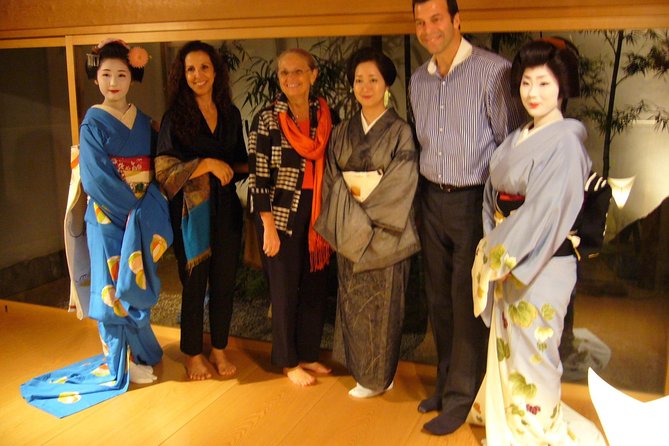
The rarest part of this Kyoto evening is not the dinner. It is the chance to sit across from a geiko or maiko, ask personal questions, and watch her perform in a private setting. You begin near Minamiza Kabuki Theatre, walk through Gion, then move to a restaurant or tea house for dinner and conversation.
I like the walk because it gives the evening context, and I like the English-speaking guides, especially Mia, Mie, and Miyah, who are praised for making the customs easier to understand. The main caution is the fixed traditional menu: picky eaters, vegetarians, vegans, and anyone avoiding seafood should sort out the food question before paying.
Key points to know before booking
- A real geiko or maiko joins dinner: Expect conversation, traditional dance, music, singing, and sometimes simple drinking games.
- Gion comes first: The evening opens with a guided walk from Minamiza Kabuki Theatre through Kyoto’s historic geiko district.
- Kaiseki is part of the experience: The meal may include several courses of seafood, vegetables, tempura, and other traditional dishes.
- The guide matters: Mia, Mie, and Miyah receive especially warm praise for clear English, humor, translation, and cultural background.
- Private does not always mean one tiny party: Your booking is for your group, but some versions and group arrangements can include a larger gathering.
- Budget about $381.49 per person: This is a major splurge, best suited to someone who values access and cultural exchange more than a long dinner.
Why this Gion evening feels different
Kyoto offers plenty of staged cultural shows. This experience aims at something more personal: a meal with a woman trained in the geiko or maiko tradition, with a guide helping both sides talk. That difference matters.
A geiko is Kyoto’s term for a professional entertainer often called a geisha elsewhere in Japan. A maiko is an apprentice. You may meet one, the other, or both, depending on the arrangement for your evening. The time together can include questions about training, clothing, daily life, studies, performance, and the path from maiko to geiko.
The evening is not simply a photo stop. You sit in a traditional room, eat a formal Japanese meal, watch a dance, and take part in entertainment such as songs, shamisen music, or games. In some accounts, a maiko explains her life and interests; in others, the encounter includes a geiko as well. The exact lineup is not guaranteed, so book this for the cultural exchange, not a promise of a particular performer.
I especially like that the guide prepares you before the meeting. A good interpreter does more than convert Japanese words into English. She explains why the customs matter, helps you ask thoughtful questions, and keeps the conversation comfortable. Guides named Mia, Mie, and Miyah are singled out for their warmth, humor, strong English, and background in geiko culture.
More romantic dinners for two in Japan:
- Private Dinner with Maiko and Geiko in Kyoto
★ 5.0 · 28 reviews - Tokyo: Private dinner with Geisha at a Member’s only Ryotei
★ 5.0 · 16 reviews - Tokyo Private dinner with Geisha
★ 5.0 · 10 reviews
Starting at Minamiza and walking through Gion
The meeting point is in front of the main gate of Minamiza Kabuki Theatre, facing Shijo Street, at 5:00 pm. The listed address is 198 Nakanochō in Kyoto’s Higashiyama Ward. The location is near public transportation, but you should still allow enough time to find the theater entrance and gather your group.
The walk through Gion lasts about 45 minutes in some versions of the experience. Your guide introduces the district, its traditional wooden houses, and the geiko and maiko world. This is a useful opening because the evening can otherwise feel like a series of beautiful but unexplained customs.
You may hear about the difference between a geiko and maiko, the training involved, clothing, performance duties, and common myths about the profession. One guide is described as having trained as a geiko but not completing the full course, which gave her a particularly personal understanding of the subject.
The walking portion is also the least controlled part of the evening. With a larger group, it can be hard to hear the guide on city streets. If your group is big, stay close and ask the guide to repeat anything important. The walk is not a long sightseeing tour, so treat it as preparation for dinner rather than a full exploration of Gion.
Entering the restaurant or private tea house
After the walk, you go to a Japanese restaurant or tea house. The setting is one reason this experience costs more than an ordinary dinner and dance show. You are not watching from a theater seat. You enter a private room and receive the evening’s food and entertainment in a more intimate setting.
The exact arrangement depends on the option you choose at checkout. Options include a casual dinner, half kaiseki, full kaiseki, and a private tea house experience. The descriptions are not identical, so read the selected option carefully. The private tea house choice includes drinks, while drinks are generally available for purchase with the other options.
Traditional rooms can have limited floor space. That matters during the dance. One account describes the performance area as a tight corner, with very little room for movement. You still see the dance up close, but this is not a large stage production with elaborate lighting or broad choreography.
The intimate room has a tradeoff. You gain access to conversation and detail, but the performance may be shorter and less theatrical than you expect. Some evenings include one performer, while others have more than one. The private setting is the attraction, not a polished stage spectacle.
What the kaiseki dinner includes
The meal is described as half or full kaiseki, a traditional Kyoto-style sequence of courses. Expect several small dishes, with seafood, vegetables, tempura, and other seasonal Japanese preparations. The food is part of the cultural setting, not simply fuel between performances.
A full meal can be elaborate and filling. One person who selected half kaiseki found it was plenty of food. Another described the dinner as delicious and traditional. You should arrive ready to try unfamiliar flavors and textures, since substitutions may not be possible.
This is the biggest practical concern in the booking. Dietary requests are requested at the time of booking, but they have not always been handled well. A vegetarian request was reportedly met with a fixed menu, and another party with seafood restrictions did not receive the expected changes. The safest advice is to contact the operator and confirm the restriction before committing, but do not assume the kitchen can redesign the meal.
If you are adventurous with food, the menu can add to the evening. If you are selective, the dinner may become the least enjoyable part. The food is traditional, and some dishes may include raw fish or ingredients you do not normally eat. Ask the guide what each course contains. A printed explanation of the dishes is not guaranteed.
Drinks deserve a separate note. They are included with the private tea house option, but not generally with the other choices. Drinks can be purchased separately. Japan’s minimum drinking age is 20, so underage participants should not plan to drink.
A few more trips for two around Japan worth a look
- Sagano Romantic Train & Arashiyama, Kiyomizudera, Fushimi Inari Taisha Day Tour
★ 4.5 · 171 reviews - Kyoto kiyomizu Temple : Maiko and Samurai Couple Photoshoot
★ 4.8 · 25 reviews - Kyoto: Arashiyama Tour with optional Sagano Romantic Train
★ 4.7 · 18 reviews - Kurashiki Private Romantic Night in the Observatory Recliners
★ 4.5 · 15 reviews
Meeting the maiko or geiko
The performer usually joins during the meal. This is when the tour earns its high price. You can ask questions directly, with the guide translating when needed, rather than watching a demonstration from a distance.
Expect questions about training, clothing, performance, daily routines, and future plans. A maiko may explain her studies and the road toward becoming a geiko. You might also learn about how traditional dress is put on, how performance skills are practiced, and how modern interests fit into a highly formal profession.
The guide helps keep the conversation moving. This is especially valuable if you are shy or unsure what is appropriate to ask. Families with teenagers have found the format workable because the guides can make the subject lively without losing respect for the tradition.
The performer may not speak English. That is not a problem if your guide is present to interpret, but it does mean the rhythm of the conversation depends on translation. Give the guide time to complete the exchange instead of firing off several questions at once.
You should also understand the etiquette. The operator says it can refuse service to anyone who does not treat the traditions properly, and a cancellation caused by that refusal would not receive a refund. Dress and behavior requirements are not fully spelled out, so the sensible approach is simple: be polite, listen carefully, ask before touching clothing or personal items, and follow the guide’s instructions about photos.
Dance, shamisen, songs, and traditional games
The entertainment may include a traditional dance, singing, shamisen music, and games. Several accounts describe the dance as elegant and memorable. Some evenings include a drinking game or a simple party game, which gives the encounter a relaxed human side after the formal introduction.
The performer may show more than one dance, but the number and length can vary. In a small room, the dance might be brief. The setting can also affect how clearly you see the movement. If you expect a long stage performance, you may feel shortchanged. If you value seeing the performer close up and having time to talk, the format makes sense.
The games are not just filler. They show the social side of the entertainment tradition, where the performer helps create conversation and a light mood. Still, drinking is not required to enjoy the evening, and the minimum drinking age is 20.
Photography may be possible, but you should let the guide manage it. The experience is built around respect, and the performer is not a costume model. Ask before taking close-up photos and pay attention to any limits set in the room.
How the $381.49 price earns its keep
At $381.49 per person, this is one of Kyoto’s major cultural splurges. The price includes a professional guide, dinner, a geiko or maiko appearance, and a dance performance. Drinks are included only with the private tea house option, so check the package before assuming your beverages are covered.
I would not compare this price with the cost of an ordinary kaiseki meal. You are paying for access, translation, a private arrangement, and a rare chance to ask questions in person. The value is strongest if meeting a geiko or maiko is a central reason for your Kyoto visit.
The value is weaker if you mainly want good food. Some meals have been praised, but the food quality and service can vary by venue. Slow service, trouble getting water, and a fixed menu are possible frustrations. The evening can also feel long if you are not interested in formal dining or cultural conversation.
Group discounts may be available, and this is a private activity for your group. Yet the word private needs a little care. The selected format, venue, and group size can affect how intimate the event feels. One arrangement had more people in attendance than expected, and a large group made it harder to hear the guide during the walk.
The activity is usually booked about 38 days ahead. That suggests you should not leave it until the final few days of a Kyoto stay, especially if you need a particular date or have a larger family group. Confirmation arrives within 48 hours, subject to availability.
Timing, family suitability, and practical limits
The start time is 5:00 pm, and the experience lasts about three and a half hours. Another description gives the walk and party as about three hours, so allow a little flexibility rather than scheduling a tight evening train or show immediately afterward.
The activity ends at the restaurant or tea house, although the meeting information says it returns to the meeting point. Confirm the exact end point for your chosen option if you need to arrange a taxi or meet someone afterward.
Most people can take part, and children must be accompanied by an adult. Families have used the experience with teenagers, and one booking included a three-year-old in a shorter casual version. The formal meal and quiet conversation may suit older children better than very young ones, but the supplied information does not set a minimum age.
The tour is close to public transportation, but the route includes walking through Gion. Wear shoes you can manage for a district walk, and arrive at Minamiza with time to spare. The private room may involve traditional Japanese seating, but the exact seating arrangement is not specified.
The activity is non-refundable and cannot be changed after booking. That makes early planning useful, but it also raises the stakes if your schedule or dietary needs are uncertain.
Who should book this Kyoto evening?
I would recommend it to you if you have a strong interest in Japanese culture, traditional performance, or the modern life of geiko and maiko. It is also a good choice for a special family evening, provided everyone is comfortable with a formal meal and unfamiliar food.
It suits curious eaters who want more than a photograph. The conversation is the heart of the experience, so prepare a few respectful questions in advance. Ask about training, performance, clothing, daily routines, and how the tradition fits into present-day Kyoto.
I would hesitate if you are booking mainly for dinner. I would also be cautious if you need strict vegetarian, vegan, shellfish-free, or seafood-free food. Send your requirements before purchase and get a clear answer, since a fixed menu may be used.
Should you book Private Dinner with a Geisha?
Book it if meeting a geiko or maiko in a private room feels like a once-in-Kyoto priority. The strongest parts are the personal conversation, the translation, the Gion introduction, and the chance to see music and dance at close range. Guides such as Mia, Mie, and Miyah can make the difference between a mysterious evening and one you truly understand.
Skip it if $381.49 is more than you want to spend on a three-hour cultural event, or if dinner restrictions are non-negotiable. For the right person, the price buys rare access. For someone focused on food, a standard kaiseki restaurant and a separate performance may offer better value.
FAQ
Where does the Private Dinner with a Geisha begin?
The meeting point is in front of the main gate of Minamiza Kabuki Theatre, facing Shijo Street, at 198 Nakanochō in Kyoto’s Higashiyama Ward.
What time does the experience start?
The listed start time is 5:00 pm.
How long does the evening last?
The experience lasts about three and a half hours. One itinerary description gives the walk and party as about three hours, so allow extra time around the scheduled duration.
What does the walking portion include?
You walk through Gion, Kyoto’s historic geiko district, with an English-speaking guide. The guide explains the district and the geiko and maiko traditions before you go to the restaurant or tea house.
Is dinner included?
Yes. Dinner is included, with either a half or full kaiseki-style meal depending on the selected option. Drinks are not generally included, except with the private tea house option.
Will I definitely meet both a geiko and a maiko?
No. The experience may include a geiko, a maiko, or both. The supplied details do not guarantee a particular performer or a specific number of performers.
Can I request dietary changes?
You should provide dietary requirements when booking, but the menu may be fixed and changes are not guaranteed. Contact the operator before booking if you have a serious restriction.
Is the activity refundable if I cancel?
No. The experience is non-refundable and cannot be changed for any reason after booking.
Just added around Japan
- Romantic Proposal Production Photo Video and Drone★ 5.0 · 2 reviews
- Couple Plan★ 5.0 · 2 reviews
- Osaka After Dark A Private Dinner Time Tour In Dotonbori & Namba★ 5.0 · 2 reviews
- Kyoto Sagano Romantic Train in Arashiyama Bus Tour★ 3.0 · 6 reviews
- Handmade Wedding Ring Experience in Kyoto★ 5.0 · 3 reviews
- Kyoto Private Kimono Photoshoot for Couple and Solo★ 5.0 · 4 reviews
- Kyoto: Enjoy Sushi & Market Tour! Best for Family & Couple!★ 5.0 · 2 reviews
- Arashiyama Walking Tour with Optional Sagano Romantic Train Ride★ 5.0 · 6 reviews
Romantic Dinners for Two, compared.

Candlelit Dinner River Cruise with Live Music
Read our review →
Budapest Danube River Candlelit Dinner Cruise with Live Music
Read our review →

Madrid Local Tapas Tour with Private Dinner and Bottomless Wine
Read our review →
Blissful Spa Escape & Romantic Candlelight Dinner
Read our review →
Private Dinner in the dunes in the Mleiha National Park
Read our review →
Amazing Romantic Dinner on a Spanish Galeon with Saxophone Music
Read our review →Browse the lists this tour appears in