
Review · KYOTO
Kyoto: Enjoy Sushi & Market Tour! Best for Family & Couple!
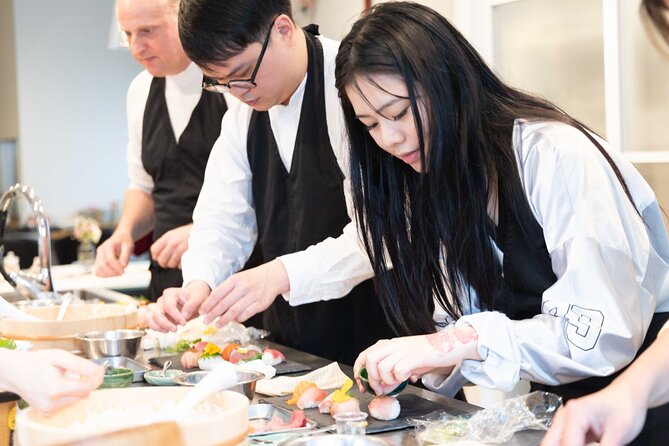
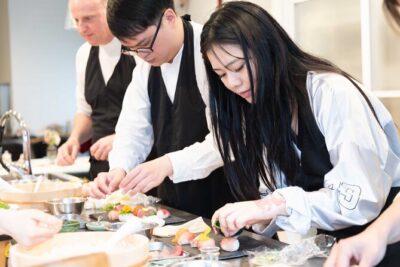
Kyoto’s Sushi Gastronomy Lab turns a short meal into a hands-on lesson. You make three sushi styles, prepare dashi and miso soup, roll tamagoyaki, then sit down with dessert and coffee. The fish is bought fresh that morning, and the small group can include no more than 10 people.
I like the practical recipes you can repeat at home and the chance to taste Kyoto-style soy sauce and miso. I also like the family-friendly format, with vegetarian menus available if you arrange them ahead of time. The main consideration is that this is a 90-minute cooking class, not a full guided walk through Nishiki Market or a broad Kyoto food tour.
Key points at a glance
- Fresh morning fish: Ingredients are purchased on the day of the class from reliable vendors.
- Three sushi styles: You’ll prepare nigiri, temari, and temaki, each with a different shape and technique.
- More than sushi: The lesson includes vinegar rice, dashi, miso soup, and Japanese rolled omelet.
- Small group setting: The maximum is 10 people, which suits families and couples better than a large demonstration.
- Vegetarian arrangements: A vegetarian menu is available when requested in advance.
- Dessert and coffee included: Kyoto-style handmade dessert follows the meal, with sake and beer available for an added charge to adults age 20 and over.
What this Kyoto sushi class is really like
This class is best understood as a compact introduction to Japanese home cooking, with sushi as the main event. You are not simply handed a plate and told how it was made. You work through the basic parts, starting with vinegar rice and ending with several finished dishes.
The focus is useful because sushi depends on small details. Rice must be seasoned properly. Fish needs to be handled with care. Shapes need a light touch rather than force. A good class makes those steps less mysterious, and this one is designed to show you methods that can be repeated in your own kitchen.
The format also leaves room for conversation after the cooking. A Kyoto tourism expert shares seasonal sightseeing suggestions, so you may pick up ideas for what to see during the rest of your stay. That is a pleasant addition, though the class should not be booked as a substitute for a dedicated sightseeing tour.
The maximum group size is 10. That matters in a cooking class. You are more likely to see the instructor’s hand movements and ask for help when shaping rice or rolling the omelet. At the same time, the class may still feel social rather than private, so couples seeking a completely personal lesson should keep that distinction in mind.
More market walks for two in Japan:
- Kyoto: Enjoy Sushi & Market Tour! Best for Family & Couple!
★ 4.8 · 20 reviews - Big Fat Indian Wedding, shopping & bazaar walking tour in Chennai
★ 5.0 · 15 reviews - Bali: Jimbaran Seafood Market Tour with Sunset Dinner
★ 4.0 · 7 reviews
Starting with Japanese food culture and vinegar rice
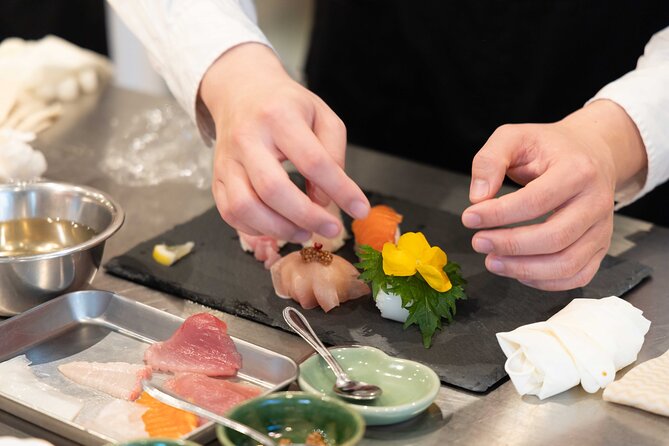
The class begins with an introduction to Japanese food culture. This gives the meal some context before you start handling ingredients. You learn that sushi is not only about raw fish. Rice, seasoning, texture, and balance all play important roles.
Next comes vinegar rice. This is one of the most useful parts for anyone who wants to repeat the meal at home. The rice is the base for nigiri, temari, and temaki, so getting this stage right helps with everything that follows.
You also get to taste traditional seasonings, including soy sauce and miso. Kyoto cooking often depends on careful seasoning rather than heavy sauces, and tasting these ingredients directly helps you notice the difference between a familiar condiment and a more traditional preparation.
Freshness is another strong point here. The fish is purchased on the morning of the class. That does not turn this into a fish market visit, but it does mean the seafood is selected for that day rather than pulled from an old standing supply. If fresh fish is a major reason you are considering the class, this morning purchase is an important detail.
Making nigiri, temari, and temaki
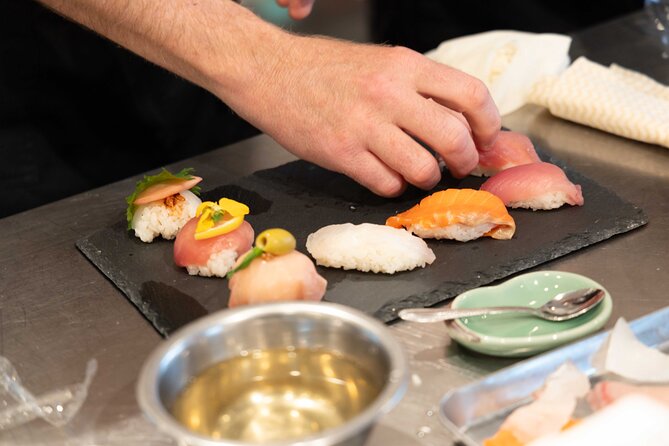
The sushi section covers three forms. Nigiri is the familiar hand-shaped sushi with a piece of fish over seasoned rice. It looks simple, but shaping the rice correctly takes practice. You will learn how to make it without crushing the grains or making the portion too large.
Temari sushi has a rounded shape. It is often visually appealing and can be easier to serve at a home gathering because each piece looks neat and compact. The class presents sushi as something creative, not just technical. You can use the basic structure as a starting point for your own presentation.
Temaki is hand-rolled sushi, usually formed into a cone or similar shape. It offers a different way to combine rice and fillings, and it is well suited to casual meals where everyone can assemble their own food.
The variety gives the 90-minute lesson a good rhythm. You are not repeating one sushi style for the entire class. Instead, you compare three methods and see how the same basic ingredients can look and feel different.
The class is also pitched as something you can use for a home party. That is a sensible promise. Nigiri may take more practice, while temari and temaki can be approachable options when you want friends or family to participate. A useful souvenir from this kind of activity is not only a photo, but a meal you can try again.
Dashi, miso soup, and the flavor behind the meal
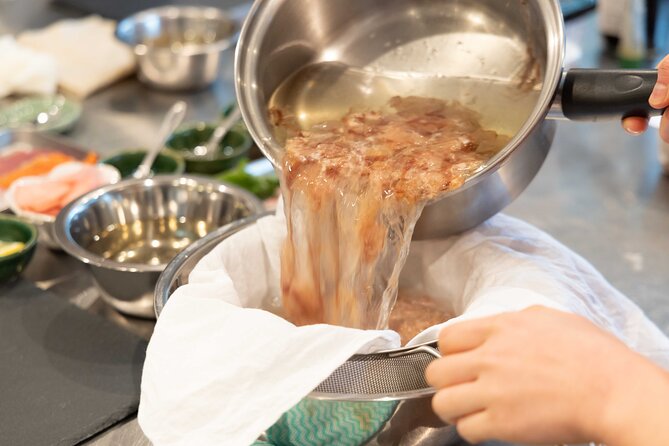
Sushi gets the attention, but the dashi section adds depth to the lesson. You learn how to make dashi, taste and compare it, and use it in miso soup. This helps explain why Japanese soups and sauces can taste full even when they are not heavily seasoned.
Tasting and comparison are valuable because dashi is easy to overlook when you are eating in a restaurant. In a class, you can focus on the base flavor before it becomes part of the finished soup. That gives you a clearer sense of how Japanese cooking builds taste in layers.
The miso soup also connects to the seasonings introduced earlier. You have already tasted miso on its own, and then you see how it works in a complete dish. For someone who cooks at home, this is more useful than simply being told that miso is important.
I would not expect a full culinary school lesson in a 90-minute session. The advantage is the manageable scale. You get a compact look at several foundations without committing half a day to one recipe.
More shopping days for two in Japan:
- Delhi : Wedding Shopping Tour with Female Guide
★ 5.0 · 2 reviews
Rolling tamagoyaki and sitting down to eat
Tamagoyaki, the Japanese rolled omelet, is another practical part of the class. The technique involves cooking and rolling the egg in stages, so it adds a different skill from sushi preparation. It also gives you a cooked dish alongside the raw fish.
For families, this may be one of the easiest parts to enjoy together. Children who are less interested in raw seafood can still take part in making the omelet, rice, or hand rolls, depending on the instructions provided during the class. The supplied information specifically presents the activity as suitable for families and couples, and the cooking mix supports that claim.
Once the food is prepared, you eat what you made. This meal is not an afterthought. It is the point at which you can compare the different sushi shapes, taste the soup, and see how the components work together.
Dessert and coffee follow. The dessert is handmade and typical of Kyoto, adding a local touch beyond the sushi itself. You can also take dessert away, which is useful if you are full after the meal or want to save it for later.
Sake and beer are available for an additional charge. Alcohol is served only to adults age 20 and over. Since the base price already includes the main meal, dessert, and coffee, the extra drinks are optional rather than a required part of the class.
Fresh ingredients and vegetarian planning
The fish is sourced from reliable vendors and purchased on the morning of the activity. For a sushi class, that is a meaningful detail, particularly if you are cautious about seafood quality.
Still, fresh fish does not mean every portion will match your favorite type of sushi. The supplied information does not list specific fish varieties, so you should not book expecting a particular species. If you have strong preferences, ask before booking.
Vegetarian menus are available. The important part is timing: request a different ingredient set in advance. Do not wait until you arrive and assume the kitchen can change the meal on the spot.
This arrangement makes the class workable for mixed groups. One person can choose the standard menu while another receives vegetarian ingredients, but you need to communicate the request ahead of time. The information does not specify vegan, gluten-free, allergy-safe, or other special menus, so those needs should be confirmed directly before you pay.
Is the 85.64 dollar price fair?
At $85.64 per person, the class is not a cheap meal. You are paying for more than the ingredients, though. The price covers instruction, a small group setting, the fish and other food, the meal you prepare, dessert, and coffee.
The included range of dishes improves the value. You are not spending the full fee on a single sushi demonstration. You make vinegar rice, three sushi styles, dashi, miso soup, and tamagoyaki. You also get a Kyoto-style dessert and a chance to discuss seasonal sightseeing.
The strongest value comes if you will actually use the techniques later. Materials are provided so you can make the sushi again at home. That turns the activity into a practical souvenir rather than a one-time lunch.
The value is weaker if you mainly want to eat expertly prepared sushi without doing the work. A sushi restaurant will give you a broader selection and may be a better choice for a special meal. This class suits you if the making is part of the fun.
The average booking lead time is 59 days. That suggests you should reserve well ahead during busy Kyoto seasons, especially if your schedule is fixed or you need a vegetarian menu.
Location, timing, and what to plan around it
The meeting point is on the third floor at 284 Ogisakayacho, Shimogyo Ward, Kyoto, postal code 600-8095. The location is near public transportation, which helps when fitting the class into a day of sightseeing.
The activity lasts about 1 hour and 30 minutes and ends where it begins. That makes it easy to combine with other plans, but you should allow extra time to find the building and reach the third floor. The supplied directions identify the address and floor, but they do not provide a named station or a detailed walking route.
Because the activity is short, it works well as a morning or afternoon stop. You might pair it with nearby sightseeing before or after, but the class itself does not include transportation between attractions.
The title refers to a sushi and market experience, but the stated program focuses on cooking. Fresh fish is purchased at the market or through vendors before the class, yet no guided market walk is described. I would book this for the kitchen lesson, not for an escorted tour of market stalls.
Confirmation is normally sent at booking. If you book within three hours of the start time, confirmation comes as soon as possible and depends on availability. Free cancellation is available if you cancel at least 24 hours before the start time. Cancellations or changes inside that window are not accepted for a refund.
Best for couples, families, and curious home cooks
Couples get a relaxed shared project and a meal at the end. Instead of sitting across from each other at a restaurant, you work through the same recipe and compare your finished pieces. The small maximum group size helps keep the activity personal without making it a private lesson.
Families with children can also find plenty to do. Sushi shaping, hand rolls, tamagoyaki, and dessert offer different levels of involvement. The one caution is that the class is still a structured cooking lesson, so very young children may need close help from an adult. The supplied information does not state a minimum age, so confirm that point before booking for small children.
Home cooks are likely to get the most from the class. The techniques are simple enough to attempt again, and the take-home materials give you a better chance of repeating the meal after returning home.
This is less suitable if you want a long food walk, a large market tour, a formal sake tasting, or a high-end omakase meal. It is also not the right pick if you need a guaranteed ingredient list that has not been confirmed in advance.
My call: book it if you want to make Kyoto food
I would book this class if you want a short, hands-on introduction to Japanese cooking with enough variety to keep the session interesting. The fresh morning fish, three sushi styles, dashi and miso work, tamagoyaki, Kyoto dessert, and take-home materials give the price a solid purpose.
Families and couples should find the format especially appealing, and vegetarian diners have a workable option if they request it early. Just keep your expectations clear: this is a 90-minute kitchen activity at a central Kyoto address, not a guided walk through a market.
If you prefer someone else to prepare the meal, spend the money at a sushi counter instead. If you want to learn how to make a meal you can recreate at home, this class makes a strong case for itself.
FAQ
How long does the sushi class last?
The activity lasts approximately 1 hour and 30 minutes.
Where does the activity start and finish?
It starts at the third floor of 284 Ogisakayacho, Shimogyo Ward, Kyoto, 600-8095, Japan. It ends back at the same meeting point.
What types of sushi will I make?
You will learn to prepare nigiri, temari, and temaki sushi.
Is a vegetarian menu available?
Yes. Vegetarian menus and menus using different ingredients are available if you make the request in advance.
Are drinks included?
Dessert and coffee are included. Sake and beer are available for an additional charge, and alcoholic drinks are served only to adults age 20 and over.
What is the cancellation policy?
You can cancel at least 24 hours before the start time for a full refund. Cancellations or changes made less than 24 hours before the start time are not accepted for a refund.
Just added around Japan
- Romantic Proposal Production Photo Video and Drone★ 5.0 · 2 reviews
- Couple Plan★ 5.0 · 2 reviews
- Osaka After Dark A Private Dinner Time Tour In Dotonbori & Namba★ 5.0 · 2 reviews
- Kyoto Sagano Romantic Train in Arashiyama Bus Tour★ 3.0 · 6 reviews
- Handmade Wedding Ring Experience in Kyoto★ 5.0 · 3 reviews
- Kyoto Private Kimono Photoshoot for Couple and Solo★ 5.0 · 4 reviews
- Arashiyama Walking Tour with Optional Sagano Romantic Train Ride★ 5.0 · 6 reviews
- Kyoto: Private romantic photoshoot for couples★ 5.0 · 4 reviews
Shopping Tours, compared.
Enjoy Sushi & Market Tour! Best for Family & Couple!
Read our review →
Big Fat Indian Wedding, shopping & bazaar walking tour in Chennai
Read our review →

Browse the lists this tour appears in