
Review · VIENNA
Vienna: Romantic Old Town 2-Hour Discovery Tour
Vienna’s old town reveals its best details when you look above shopfronts and behind grand façades. This two-hour walk begins at the Anchor Clock on Hoher Markt and follows six themes, from Roman-era traces and Jewish history to Greek merchants, Baroque church art, city legends, and cramped medieval lanes.
I like the private format, especially for a group of up to seven. I also like the focus on overlooked corners north and east of St. Stephen’s Cathedral, where you can see the city’s layers without spending the whole walk in front of its most famous monuments. The main drawback is price: at $352 per group, it makes the most sense when several people share the cost.
Key points at a glance
- Anchor Clock starting point: Meet at Hoher Markt, one of Vienna’s oldest and most revealing squares.
- Six linked themes: Romans, Jews and traders, the Greek Quarter, architecture, legends, the old university, and narrow lanes.
- Private group of up to seven: You can ask questions and set the pace more easily than on a large group walk.
- Guides with personality: Wolfgang Auinger and Max receive particular praise for clear, engaging presentations.
- A close look at architecture: Expect Gothic towers, Renaissance courtyards, Baroque palaces, Rococo houses, Gründerzeit buildings, and Art Nouveau details.
- Good first-day orientation: The route helps you understand Vienna’s old town before returning to its major museums and palaces.
Hoher Markt and the Anchor Clock
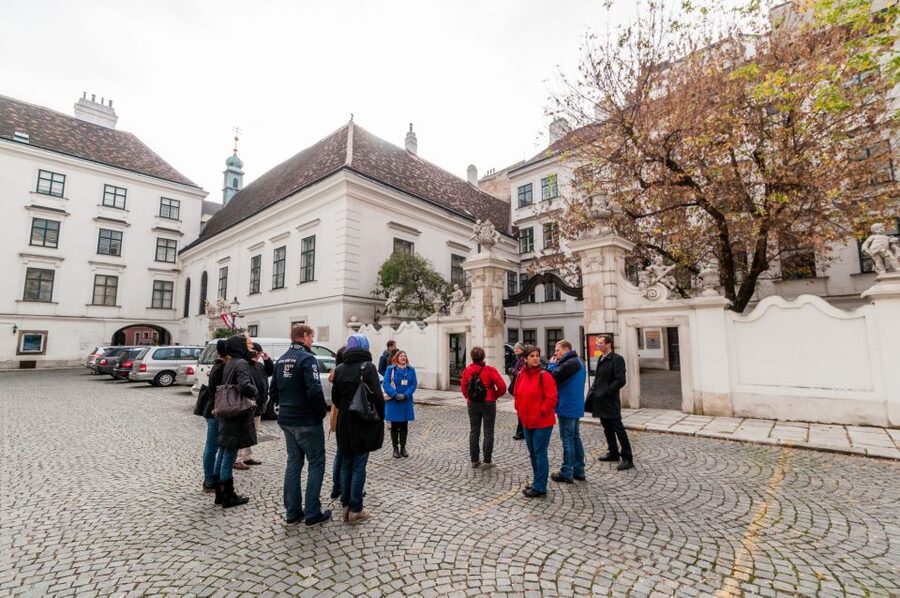
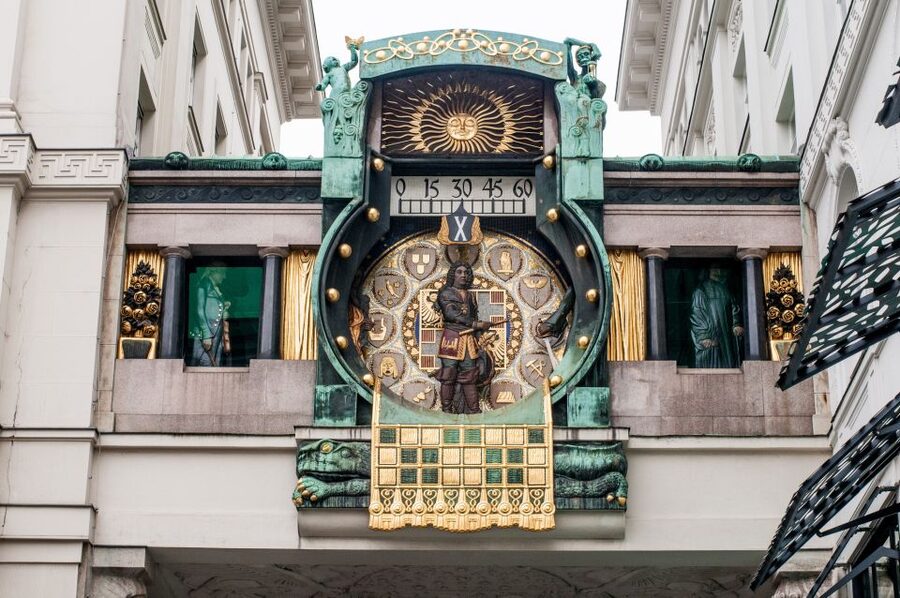
Your meeting point is the Anchor Clock at Hoher Markt, and that is a sensible place to begin. The square has drawn politicians, architects, merchants, and tradespeople for centuries. It gives your guide plenty of material before the walk has really started.
The Anchor Clock is more than a decorative landmark. It contains surprises tied to Vienna’s past, and your guide uses it as a way into the city’s stories. You also learn about the oldest building in Vienna and the city’s first public waterworks. Those details may not be as famous as Schönbrunn Palace or St. Stephen’s Cathedral, but they help explain how the old town functioned.
This opening section is valuable because it puts daily life beside grand history. Vienna was not built only for emperors. It was also a place of trade, religious communities, water problems, political power, and practical city planning.
Look closely at the square before you move on. The point is not just to hear dates. It is to understand why this particular patch of Vienna attracted so many different groups over time.
A few more trips for two around the world worth a look
- Maui: 2 Hour Sunset Dinner Sail with Open Bar and Appetizers
★ 4.7 · 65 reviews - Heidelberg: City of Romance 2-Hour Walking Tour
★ 4.8 · 60 reviews - Private Romantic cruise with sparkling wine- 2-Hour- Lisbon
★ 4.9 · 52 reviews
The Greek Quarter beside the Danube
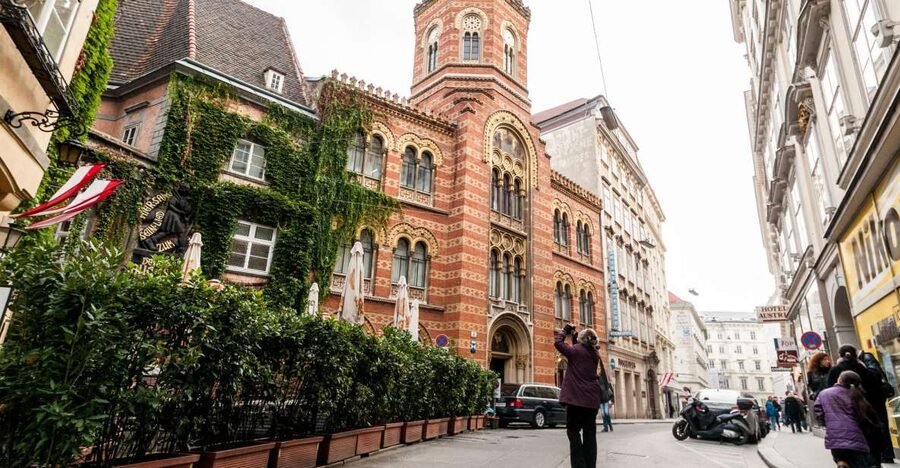
The route then turns toward the Greek Quarter, located by the innermost arm of the Danube. This area grew from trade and migration, and its past feels different from the imperial image many people carry of Vienna.
Your guide explains how Turkish forces fought in the area and how Greek residents prepared for their struggle for independence. The quarter is a useful reminder that Vienna was tied to southeastern Europe through commerce, politics, religion, and family networks.
You can expect a walk through a part of the old town shaped by movement. Merchants arrived, communities settled, and political ideas crossed borders. The Greek Quarter is not presented as a separate museum district. Its story is read from the streets and buildings around you.
This is one of the stronger reasons to choose the tour if you already know the usual Vienna landmarks. The subject adds social and political context to the city, rather than simply repeating the standard palace-and-music story.
The area can also feel busy, so stay close to your guide and pay attention at crossings. The walk is only two hours, and the route covers several subjects, so this portion works best as a clear introduction rather than a full study of Greek Vienna.
Vienna’s architectural time machine
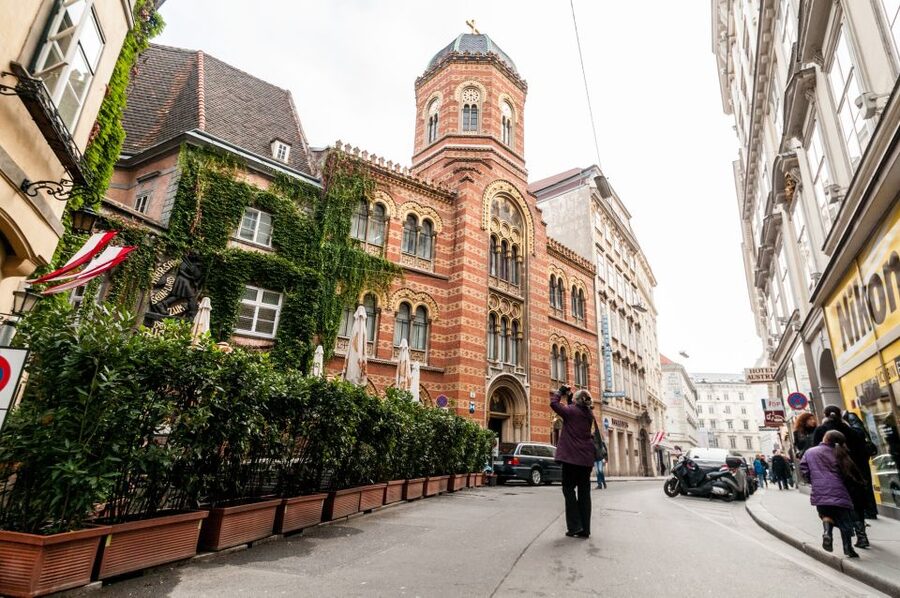
The tour’s architectural section is likely its most visually rewarding. Vienna’s old town puts several centuries beside one another, sometimes on the same street.
You may see Gothic residential towers, medieval paving, Renaissance back courtyards, Baroque city palaces, Rococo rows of houses, grand Gründerzeit buildings, and elegant Art Nouveau details. The pleasure comes from learning how to spot these styles instead of treating every old façade as simply Austrian.
A private guide can point out details you might miss while walking alone. A tower may reveal an older defensive purpose. A courtyard may show how a building was organized behind its street façade. A row of houses may reflect a period when Vienna was growing and rebuilding at speed.
I especially like this part for people who are not architecture specialists. The guide does not need to turn the walk into a lecture. A few useful comparisons can make the rest of your time in Vienna more rewarding. Once you understand the difference between a Baroque palace front and a Gründerzeit apartment block, you begin to read the city for yourself.
The route reportedly spends much of its time north and east of the cathedral. That means you may not get the most familiar postcard circuit, but you gain a closer look at streets many short-stay visitors pass without noticing.
Myths, animals, and city explanations
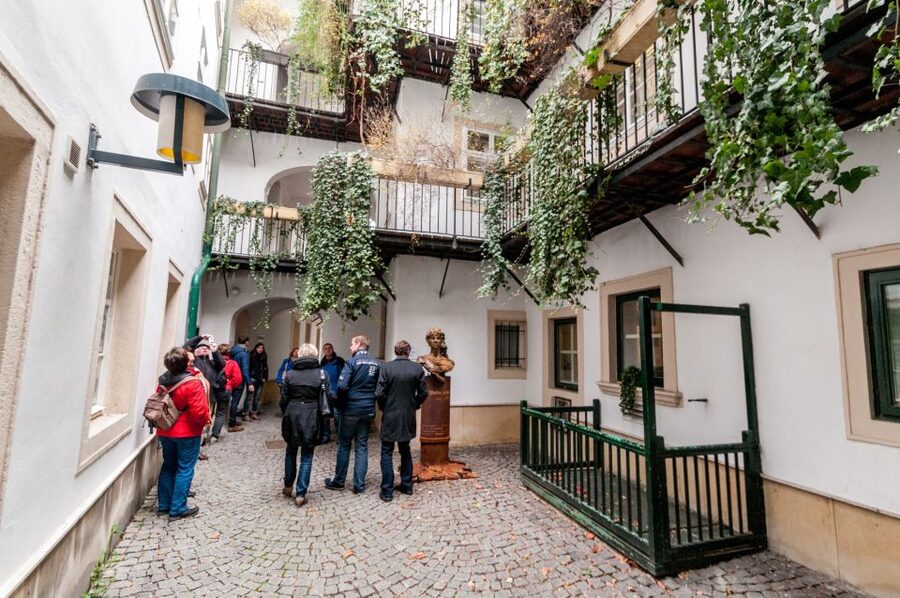
Vienna’s old town is full of stories that sit somewhere between fact and folklore. The tour gives these myths their own place, including legends connected with animals.
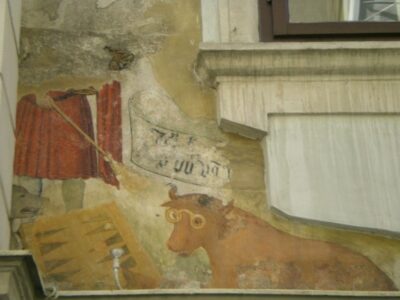
Animals appear as ornaments on façades and fountains, and your guide explains how people used such images to make sense of the city and its past. These details give your walk a playful side. They also make it easier to remember buildings after the tour ends.
The useful approach here is to separate legend from documented history. The tour does not treat every old story as fact. Instead, it shows how people have explained their surroundings over time, and why certain images kept appearing in public spaces.
This section should suit families and curious first-time visitors particularly well. It breaks up the architectural material and keeps the walk from becoming a string of dates and names. Still, if you want only hard historical evidence, you may find some of the legends less substantial than the sections on trade or architecture.
Same place, a very different kind of evening:
- Paris: Romantic Cruise with 3-course Dinner on Seine River
★ 4.3 · 2,295 reviews - Cairo: Nile Sunset Dinner Cruise, Show & Optional Transfer
★ 4.1 · 2,184 reviews - Budapest: Candlelit Dinner River Cruise with Live Music
★ 4.7 · 2,154 reviews - Budapest Danube River Candlelit Dinner Cruise with Live Music
★ 4.5 · 1,770 reviews
The old university and Jesuit quarter
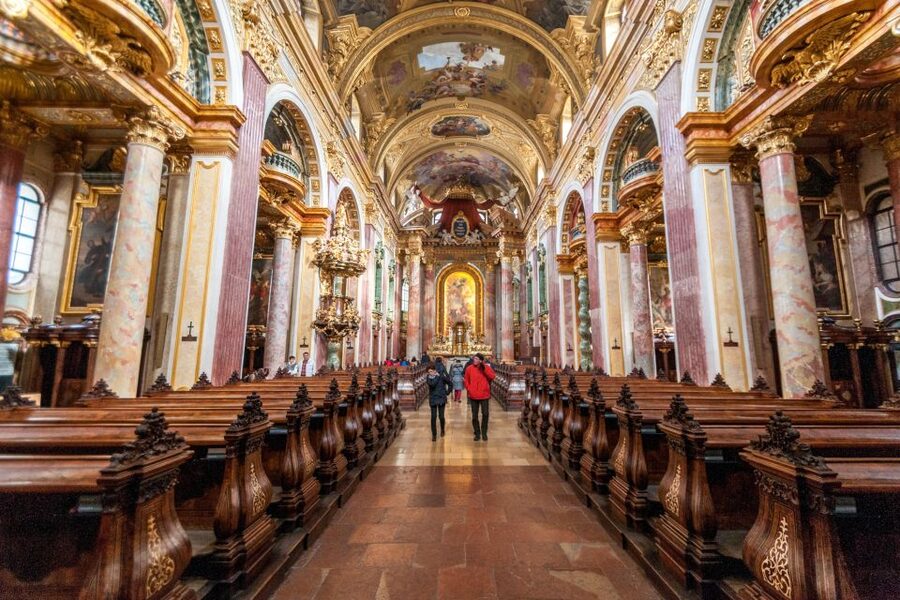
The old university quarter sits in the center of Vienna’s historic core, in an area closed to traffic. That makes it a calmer part of the route and a good place to pause.
The Jesuit Church is the key sight here. From the square and its fountain, you can look into a church known for Baroque exuberance. Its interior reflects the power of the church in Vienna, but it also tells a smaller story about artistic competition between painters and architects.
That rivalry gives the building extra interest. You are not just looking at decoration. You are considering who controlled the visual message, how church interiors were designed, and how artists worked within a powerful institution.
The traffic-free setting helps you take in the details without the constant movement of cars. If the church interior is visible during your visit, allow yourself time to look beyond the first bright impression. Baroque decoration can overwhelm you at first, and a guide’s explanation helps turn that spectacle into something understandable.
The supplied information does not promise an extended interior visit or a guaranteed stop inside every building. Think of this as an informed look at the quarter and the church rather than a dedicated church tour.
Narrow lanes and back courtyards
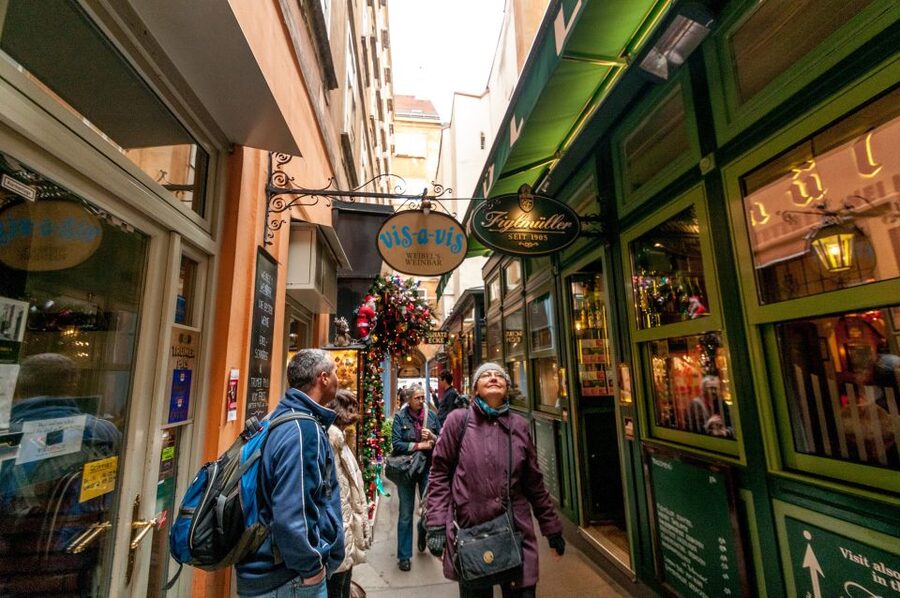
The last theme brings the walk down to street level. Vienna’s old town is not made only of broad ceremonial avenues. Many lanes are winding, narrow, and uneven in character.
You may pass medieval paving, tight passageways, and back courtyards hidden behind more polished street façades. These spaces help you imagine ordinary life in earlier centuries, including the poor hygiene conditions that shaped how people lived.
The description is deliberately vivid: even opening a window could have been unpleasant. That kind of detail gives the old town a human scale. It reminds you that historic buildings were homes and workplaces, not just monuments.
Back courtyards are also where a private walk earns its price. A guide can draw your eye toward an entrance, angle, or passage that you might otherwise ignore. You may not enter every courtyard, but the route is designed to show how much of Vienna is hidden behind the public face of the street.
Wear comfortable shoes. The walk lasts two hours, and the route includes old-town paving and narrow streets. There is no food or refreshment included, so plan a drink or snack before or after the tour.
What the guide adds to the walk
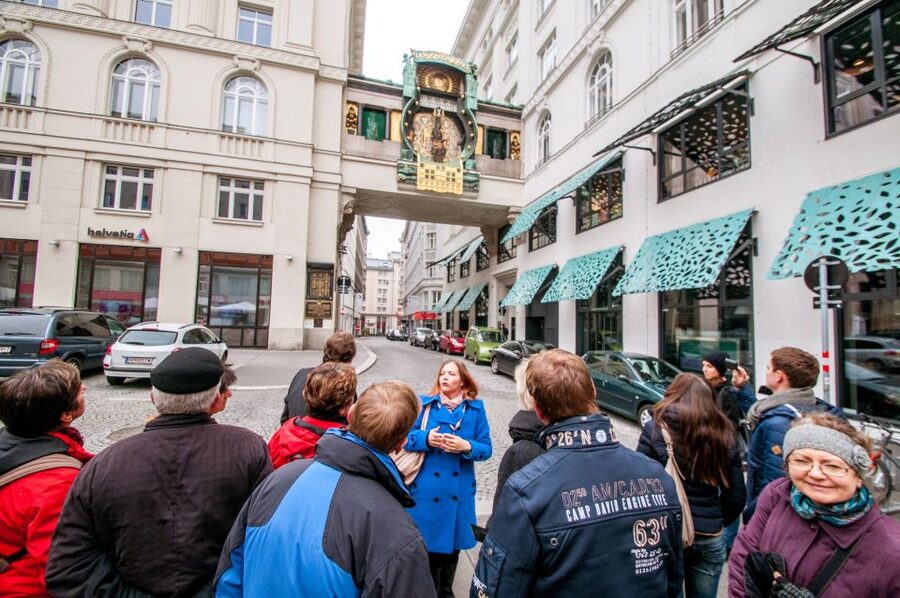
The guide is the main variable in an experience built around stories and observation. Wolfgang Auinger receives especially warm praise for being interesting, charming, and enthusiastic. Max is also singled out for a competent, friendly presentation and strong speaking style.
That matters because this is not a ticketed attraction with a fixed audio track. The quality of the walk depends on how well the guide connects the six topics and adjusts the detail to your group.
One useful caution is that personality can vary. A German-language booking received criticism that the guide talked too much and leaned more on Viennese humor than solid historical material. That does not cancel the strengths of the tour, but it is a fair reminder to tell your guide what you want: more architecture, more social history, fewer jokes, or extra time for questions.
The tour can be arranged in English, German, French, Spanish, Italian, Portuguese, Russian, Dutch, Chinese, Japanese, Arabic, and Korean for group tours. If you need a language other than the standard options shown when booking, contact the operator ahead of time.
Is $352 good value for two hours?
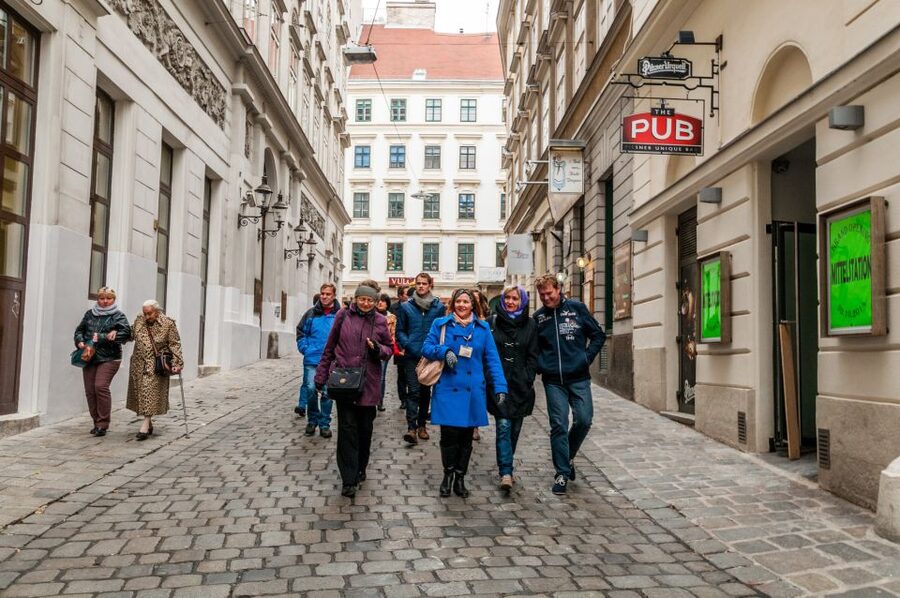
The cost is $352 for a group of up to seven, not per person. For seven people, that works out to about $50 each. For four people, it is about $88 each. For one or two people, the price is much harder to justify unless you place a high value on a private guide.
The private setup is the reason the price can work. You are paying for a focused walk, personal questions, and a route built around details rather than a large crowd moving from one famous sight to the next.
I would book it for a family, group of friends, or small private party that wants a quick but thoughtful introduction to central Vienna. I would hesitate as a solo visitor on a tight budget. A two-hour public walking tour would likely offer a cheaper way to see the main sights, though it may not provide the same attention to hidden courtyards, the Greek Quarter, or the old university district.
The tour also has practical booking flexibility. You can cancel up to 24 hours before the start for a full refund and reserve without paying immediately. Arrive at the Anchor Clock at least 10 minutes early, since finding a guide in a busy old-town square is easier when you are not rushing.
Who should book this Vienna walk?
This tour fits you best if you:
- Want a private orientation on your first day in Vienna
- Enjoy architecture, old streets, and stories behind ordinary-looking buildings
- Have already seen the major imperial sights and want a less standard route
- Prefer a guide who can answer questions in your language
- Are traveling with up to seven people and can share the group price
- Like history with a touch of legend and local character
It is less suitable if you want museum entry, food tasting, extensive time inside churches, or a long visit at each major landmark. Food and refreshments are not included, and the activity is a walking tour rather than a full-day sightseeing program.
Should you book it?
Book this tour if you want Vienna explained through its streets, buildings, communities, and odd little details. The Anchor Clock, Greek Quarter, Jesuit Church, old university, architectural mix, and back courtyards give you a broader picture than a simple parade of famous monuments.
The strongest value comes with a group of four to seven people and a guide such as Wolfgang Auinger or Max, whose lively presentations suit the subject. If you prefer a quieter, strictly academic approach, set that expectation at the start.
For a compact private introduction to Vienna’s old town, this is a smart choice. For a solo visitor counting every euro, the $352 price is the deciding factor.
FAQ
How long does the tour last?
The tour lasts two hours.
Where does the tour begin?
Meet at the Anchor Clock on Hoher Markt, 1010 Vienna. You should arrive 10 minutes before the scheduled start.
How many people can join the private group?
The price covers a group of up to seven people.
What languages are available?
Languages listed include German, Spanish, Chinese, Dutch, English, French, Italian, Japanese, Portuguese, and Russian. Group tours may also be available in Arabic and Korean. Contact the operator if you want to request another language.
Is food or a drink included?
No. Food and refreshments are not included.
Can I cancel the booking?
You can cancel up to 24 hours in advance for a full refund. You can also reserve now and pay later.
Just added around the world
- From Zadar: Romantic Sunset Sailboat Tour★ 5.0 · 5 reviews
- YOUR HONEYMOON IN TUSCANY: Private Chianti Wine Tasting Tour★ 5.0 · 3 reviews
- Zadar: Romantic Sunset Boat Tour with Champagne★ 4.9 · 11 reviews
- Zakynthos: Romantic Sunset Tour & the Legend of the Dragon★ 5.0 · 4 reviews
- Warsaw: Romantic Cruise with Prosecco–Birthdays & Proposals★ 5.0 · 2 reviews
- Vienna: Professional Proposal Photographer★ 5.0 · 8 reviews
- Victoria Falls: Batoka Gorge Hike & Sunset Dinner★ 5.0 · 3 reviews
- Anniversary & Destination Wedding Photo-shoot in Vienna★ 5.0 · 3 reviews
Vienna Honeymoon Experiences, compared.
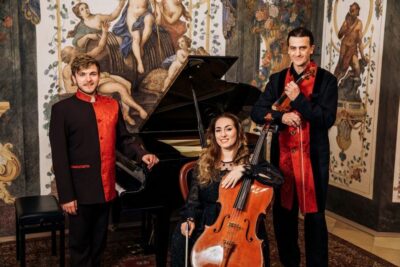
Romantic Classics Piano, Violin, and Cello Concert
Read our review →
Nuit des Lumières – The Candlelight Dinner Concert in Vienna
Read our review →
Wine Tasting in a 600 year historical wine cellar
Read our review →Browse the lists this tour appears in