
Review · VIENNA
Vienna: Romantic Classics Piano, Violin, and Cello Concert
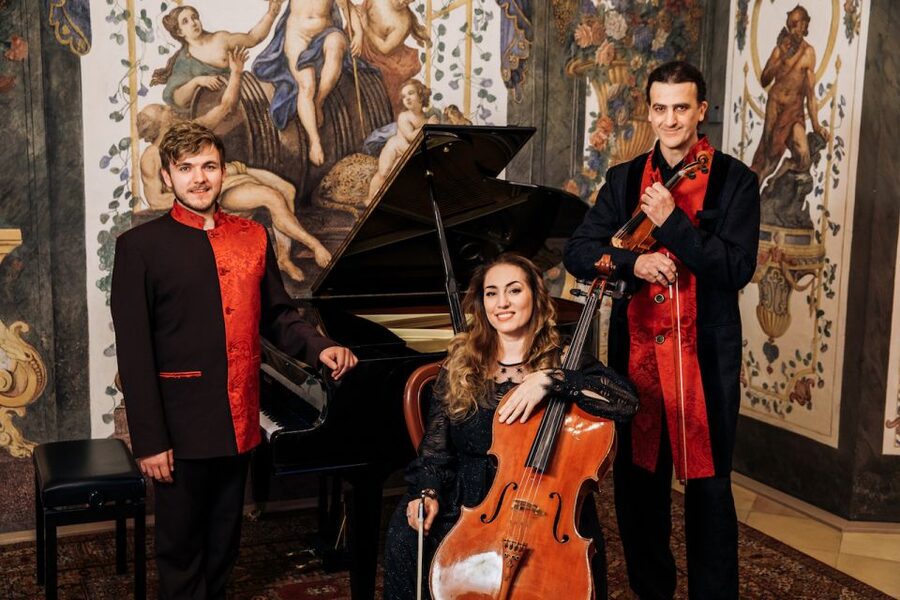
The best thing about this 90-minute Vienna concert is its setting: the frescoed Sala Terrena, reached through the Deutschordenskirche gate only 150 meters from St. Stephen’s Cathedral. You get chamber music in a small historic room, not a huge hall where the performers feel far away.
I like the broad program, which moves from Beethoven’s Moonlight Sonata and Liszt’s Un sospiro to Chopin, Bach, Paganini, Saint-Saëns, Massenet, and Schubert. I also like the choice of seating, with student, back-row, and closer-to-the-performer tickets. The main drawback is that refreshments are not included, and any drink during the break requires cash.
Key points to know
- The Sala Terrena is the setting: Frescoes and close seating give the concert a personal feel.
- The program covers several musical moods: Expect tender, dramatic, playful, and technically demanding works.
- Named performers lead the evening: Violinist Claudio Bentes, pianist Dushan Sretovic, and soloist Teodora Miteva are part of the presentation.
- The location is easy to reach: Enter at the Deutschordenskirche gate, near St. Stephen’s Cathedral.
- Seats come at different price levels: Student, back-row, and closer seats let you match the ticket to your budget.
- Plan for the practical details: Arrive 15 minutes early, use the cloakroom, and bring cash if you want a drink during the break.
A chamber concert beside St. Stephen’s Cathedral
Vienna gives you no shortage of classical music, but the room matters almost as much as the score. Here, the concert takes place in the Sala Terrena, a compact space with expressive frescoes and good acoustics. The small scale puts you close to the musicians and helps you hear the detail in quiet passages.
The venue is part of the Deutschordenskirche complex, and the entrance can be easy to miss if you simply follow signs for St. Stephen’s Cathedral. Look for the gate and the poster stand for concerts at Mozarthaus. The site is 150 meters from the cathedral, so it fits neatly into an evening walk through central Vienna.
I like this location for two reasons. First, you can pair the music with one of the city’s most famous sights without spending time crossing town. Second, the room gives the performance a sense of occasion without requiring formal concert-hall rituals. You are there for serious music, but the setting feels personal rather than grand and distant.
The venue is wheelchair accessible. A cloakroom is included, useful if you are carrying a coat after a cool evening in the city.
More live music nights for two in the world:
- Budapest: Candlelit Dinner River Cruise with Live Music
★ 4.7 · 2,154 reviews - Budapest Danube River Candlelit Dinner Cruise with Live Music
★ 4.5 · 1,770 reviews - Phnom Penh: Mekong Sunset Dinner Cruise with Live Music
★ 4.7 · 261 reviews
What the 90-minute program sounds like
The concert is called Romantic Classics, though the program reaches beyond the Romantic period. It opens with Haydn’s Trio all’ungarese, Hob XV:25, including the Andante, Poco Adagio, and Rondo finale. That gives the evening a graceful, structured beginning before the more emotionally charged works arrive.
Beethoven follows with the Adagio from the Moonlight Sonata. This is one of the most familiar pieces on the program, but hearing it in a chamber setting can shift your attention from the famous melody to the space between the notes. The slow movement asks for control and restraint, and a smaller room suits that close, inward sound.
Mozart’s La tartine de beurre, also known as Das Butterbrot, adds a lighter touch. The title refers to a buttered slice of bread, and the piece is far less solemn than the Beethoven that comes before it. This short work helps keep the program from becoming one long sequence of heavy, serious music.
The first half also includes Beethoven’s Sonata Op. 2, Allegro con brio. Compared with the Moonlight Sonata excerpt, this is more energetic and demanding. The quick movement lets you hear the contrast between Beethoven’s reflective side and his bold, driving style.
Chopin, Liszt, and the evening’s romantic center
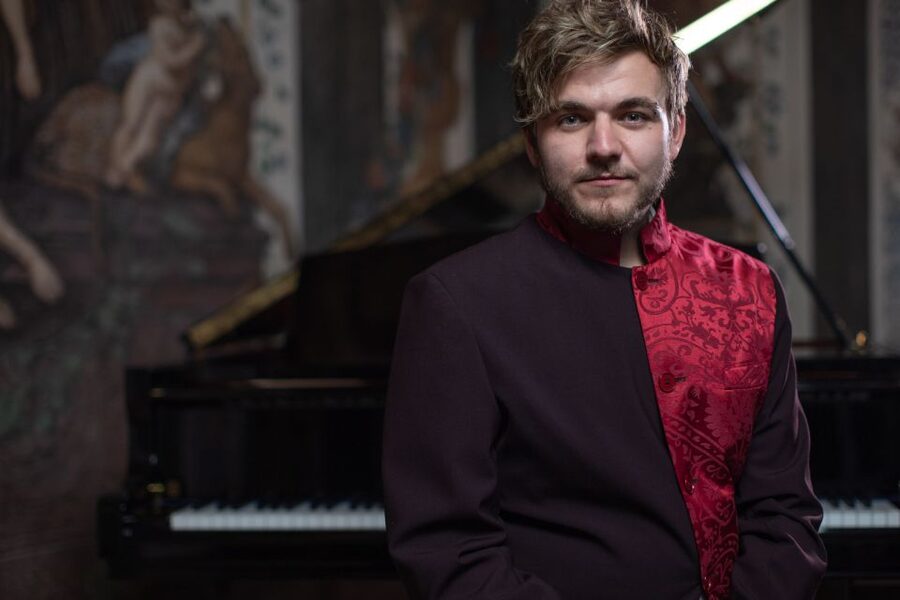
Liszt’s Un sospiro is one of the clearest expressions of the concert’s romantic theme. The title means a sigh, and the piece is known for its flowing, lyrical character. It gives the pianist a chance to shape long lines and delicate changes in mood rather than simply display speed.
Chopin receives two important selections. The Nocturne in C minor, Op. 48 No. 1, brings drama and gravity, while the Étude Op. 10 No. 1 in C major is built around wide, sweeping arpeggios. Together, they show why Chopin remains central to piano recitals: the music can sound intimate and poetic one moment, then technically formidable the next.
Dushan Sretovic is presented as an award-winning pianist who appears on international stages and is especially known for his Chopin interpretations. That makes the Chopin section a key reason to choose this concert if you want piano music at the center of the evening.
The seating choice matters here. If you want to watch the pianist’s hands and follow the physical work behind the fast passages, a seat closer to the performers should give you a better view. If you mainly want to listen and keep the price down, the back row may be perfectly sensible in a room praised for clear acoustics.
From Bach’s cello suite to Paganini’s Caprice 13
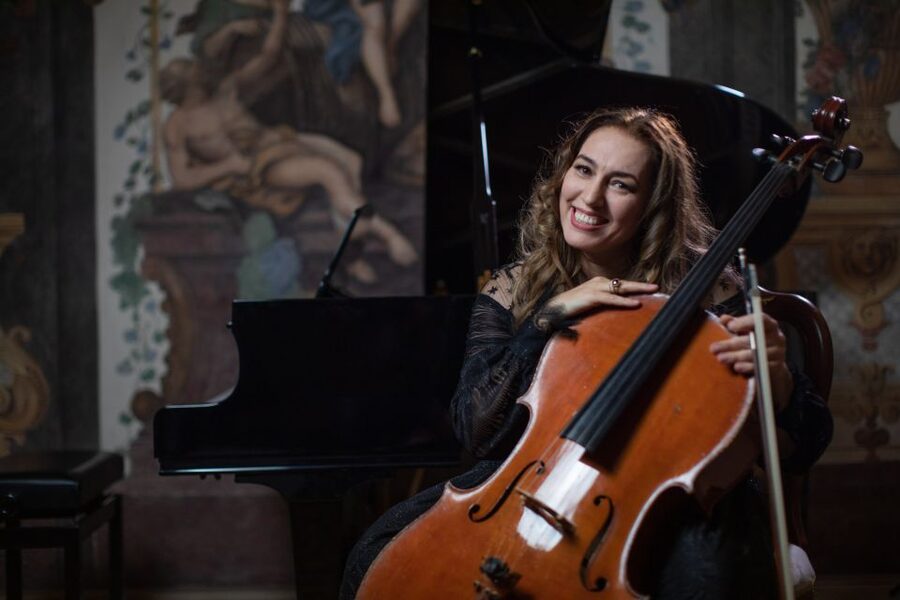
The program then moves through several shorter works, each offering a different instrument and tone. Bach’s Cello Suite in G Major, BWV 1007, begins with the Allegro. It is a familiar piece, but its appeal comes from the way one instrument creates the impression of harmony and movement without a full ensemble.
Paganini’s Caprice 13 shifts the mood again. Paganini’s caprices are linked with violin technique, and this selection brings a more pointed, showpiece quality to the program. It is a useful contrast to the warm lyricism of Liszt and Chopin.
Claudio Bentes is the named violinist for the presentation. If you enjoy hearing the violin move from singing melodies to demanding technical passages, this part of the program should be one of the evening’s highlights.
Saint-Saëns’s The Swan offers a gentler change of pace. Its smooth melody and calm character are familiar to many listeners, even if they do not know the title. Massenet’s Thaïs Meditation continues that lyrical thread, giving the violin another chance to carry a long, expressive line.
Teodora Miteva is also part of the performance and is described as a soloist with numerous international competition wins. Her presence adds another accomplished performer to the small ensemble format. The concert’s appeal is not only the list of famous composers, but the chance to hear separate instrumental voices in close surroundings.
Same place, a very different kind of evening:
- Paris: Romantic Cruise with 3-course Dinner on Seine River
★ 4.3 · 2,295 reviews - Cairo: Nile Sunset Dinner Cruise, Show & Optional Transfer
★ 4.1 · 2,184 reviews - Marrakech: Agafay Desert Magic Sunset Dinner & Live Show
★ 4.7 · 1,442 reviews - From Marrakech: Agafay Desert Sunset Dinner with Live Show
★ 4.1 · 1,286 reviews
Schubert brings the program home
The closing work is Schubert’s Trio in E-flat Major, Op. 100, Andante con moto. This is a strong choice for the end of the evening because it gathers the piano, violin, and cello into one extended chamber work after the shorter solo pieces.
The Andante con moto carries a broad, singing quality, but it is not simply sweet or decorative. Schubert’s music often moves between warmth and sadness, and the final trio gives the concert more room to breathe than the earlier individual selections.
This closing piece also helps explain the value of hearing the concert in the Sala Terrena. Chamber music depends on balance between instruments. You want to hear how the piano supports the strings, how the violin takes a melodic line, and how the cello fills out the lower register. A compact room with clear sound can reveal those connections better than a large space.
What the room and acoustics mean for your seat
The Sala Terrena is relatively small, but that is part of its appeal. The room has been praised for clear, full acoustics, with each note easy to hear. The close arrangement lets you see the musicians more directly than you would in a standard theater.
That intimacy has a tradeoff. A small venue may not offer the grand visual scale of one of Vienna’s major concert halls. If you want a sweeping orchestral sound with dozens of players, this is not the right format. If you want to notice phrasing, fingerwork, and the exchange between three performers, it is a better match.
The ticket choices make the experience easier to tailor. Student tickets provide a lower-cost route if you qualify. Back-row seats should suit listeners who care most about the music and want the listed price of $69 per person to stretch further. Seats closer to the performers cost more, but they make sense if the physical details of a live chamber performance matter to you.
Is $69 a fair price?
At $69 per person, this is not a bargain concert, but it can be a fair central-Vienna evening if you value the setting and the performer access. The ticket includes the concert and cloakroom, and the location near St. Stephen’s Cathedral saves you the need to arrange extra transport.
You are paying for more than a list of famous names. The appeal is the combination of a historic room, a 90-minute program, and a small ensemble format. The program also covers enough composers to give you variety rather than one long work or a single composer theme.
Still, keep your expectations in line with the price. The concert does not include refreshments, and drinks available during the break must be paid for in cash. A practical improvement would be clearer toilet signs during the break, since the facilities are not especially obvious. Bring some cash if that detail matters to you, and do not assume a drink is part of the ticket.
The value is strongest for someone already planning to be in central Vienna and looking for a polished cultural evening without committing to a much longer opera or symphony performance.
Timing, arrival, and the small details
Plan to arrive 15 minutes before the start. This gives you time to find the correct gate, check a coat, and settle into your seat without interrupting the opening work.
The meeting point is not simply a generic address near the cathedral. Enter through the gate at Deutschordenskirche, where you will find a poster stand for concerts at Mozarthaus. This is the detail most likely to save you from a rushed search at the last minute.
A host or greeter can assist in English or German. The activity itself is offered in those languages, though the main language of the evening is, of course, music.
The concert lasts 90 minutes. A break may be part of the timing, and the practical notes refer to toilet access during the break. Refreshments are not included, and cash is required for drinks available outside during that pause.
Free cancellation is available up to 24 hours before the concert for a full refund. You can also reserve now and pay later, which is useful if your Vienna schedule still has moving parts.
Who will enjoy this concert most?
I would recommend it to you if you want classical music in a close, visually interesting setting and you do not need a full orchestra. The program works especially well for first-time classical listeners because it includes recognizable pieces by Beethoven, Mozart, Chopin, and Schubert alongside shorter works that keep the pace moving.
It also suits experienced listeners who want a varied chamber program. The mix of piano, violin, and cello gives you several kinds of musical texture, from Bach’s spare cello writing to Paganini’s violin showpiece and Schubert’s more substantial trio.
This may not be your best pick if you want an informal concert with included drinks, extensive introductions, or a large stage. It is also not the right choice if your main goal is to hear a complete Beethoven sonata or an entire symphony. Several works appear as individual movements or shorter selections.
For couples, it makes an easy romantic evening, especially when combined with dinner or a walk around the cathedral. For solo visitors, the close seating keeps the experience from feeling impersonal. For families, the 90-minute length is more manageable than a long opera, though the seriousness of the repertoire may suit older children best.
Should you book the Romantic Classics concert?
Book it if you want a well-known classical program in an intimate historic room, especially if your evening already includes St. Stephen’s Cathedral. The combination of Sala Terrena frescoes, clear acoustics, and performers such as Claudio Bentes and Dushan Sretovic gives the concert a clear identity.
Choose a closer seat if watching the performers matters to you. Choose the back row or a student ticket if you mainly want a convenient, cultured evening at a lower cost. Bring cash for any refreshment, arrive early, and enter through the Deutschordenskirche gate rather than wandering around the cathedral area.
Skip it if you are seeking orchestral scale or a full meal-and-drinks package. For everyone else, this is a practical way to hear Beethoven, Chopin, Liszt, Schubert, Mozart, and Brahms in central Vienna without giving up an entire night.
FAQ
Where does the concert take place?
The concert takes place in the Sala Terrena, entered through the Deutschordenskirche gate. The venue is 150 meters from St. Stephen’s Cathedral.
How long does the concert last?
The concert lasts 90 minutes.
What music is performed?
The program includes works by Haydn, Beethoven, Mozart, Liszt, Chopin, Bach, Paganini, Saint-Saëns, Massenet, and Schubert.
Which Beethoven pieces are included?
The program includes the Adagio from Beethoven’s Moonlight Sonata and the Allegro con brio from Sonata Op. 2.
Are Chopin’s works part of the concert?
Yes. The program includes Chopin’s Nocturne in C minor, Op. 48 No. 1, and Étude Op. 10 No. 1 in C major.
Who are the named performers?
The presentation includes violinist Claudio Bentes, pianist Dushan Sretovic, and soloist Teodora Miteva.
What ticket types are available?
You can choose from student tickets, back-row tickets, and tickets closer to the performers.
Is the venue wheelchair accessible?
Yes, the activity is wheelchair accessible.
Is a cloakroom included?
Yes, cloakroom use is included with the concert.
Can I cancel for a refund?
Yes. You can cancel up to 24 hours before the concert for a full refund. Reserve-now, pay-later booking is also available.
Just added around the world
- From Zadar: Romantic Sunset Sailboat Tour★ 5.0 · 5 reviews
- YOUR HONEYMOON IN TUSCANY: Private Chianti Wine Tasting Tour★ 5.0 · 3 reviews
- Zadar: Romantic Sunset Boat Tour with Champagne★ 4.9 · 11 reviews
- Zakynthos: Romantic Sunset Tour & the Legend of the Dragon★ 5.0 · 4 reviews
- Warsaw: Romantic Cruise with Prosecco–Birthdays & Proposals★ 5.0 · 2 reviews
- Vienna: Professional Proposal Photographer★ 5.0 · 8 reviews
- Victoria Falls: Batoka Gorge Hike & Sunset Dinner★ 5.0 · 3 reviews
- Anniversary & Destination Wedding Photo-shoot in Vienna★ 5.0 · 3 reviews
Vienna Honeymoon Experiences, compared.
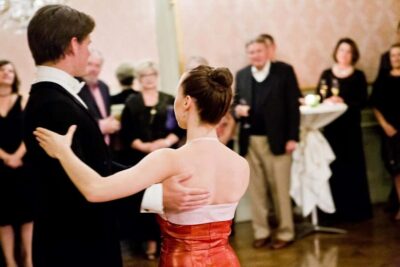
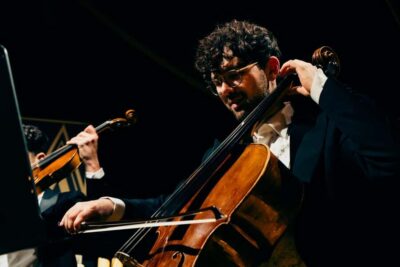
Nuit des Lumières – The Candlelight Dinner Concert in Vienna
Read our review →
Wine Tasting in a 600 year historical wine cellar
Read our review →Browse the lists this tour appears in